
Search rankings change because Google never stops recalculating them, even when your site sits untouched for months. Algorithm tweaks, competitor updates, and shifting search behaviour all reshuffle positions without you writing a single new sentence.
The mistake many site owners make is assuming a good ranking is something they’ve earned and can simply keep. So when a position slips, they either panic and start rewriting, or ignore it and hope for the best.
This article breaks down the real reasons rankings move on their own, including algorithm updates, competitor activity, and technical changes that often go unnoticed. By the end, you’ll know how to tell a normal fluctuation apart from a genuine drop worth fixing.
Search Engine Rankings Are Never Really “Set”
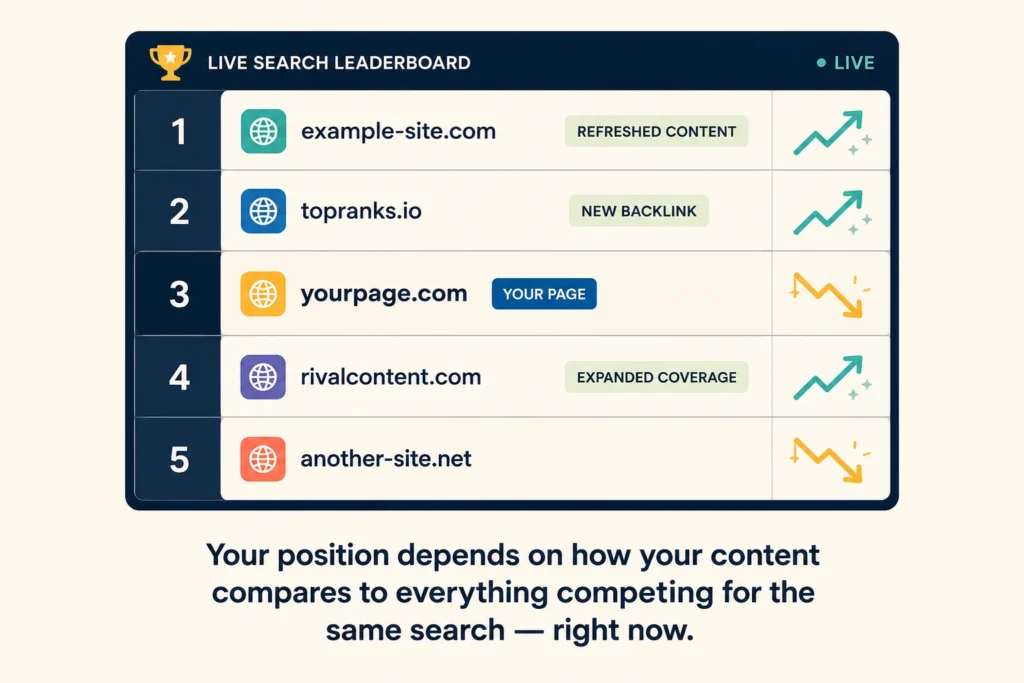
A search ranking isn’t a permanent position. It’s more like a constantly updated leaderboard where your position depends on how your content compares with other web pages competing for the same search. That’s because Google continually reassesses which pages are most relevant for a query.
So if a competitor publishes better posts or earns stronger backlinks, they can climb above you. And when they do, another result has to drop, even if nothing on that page has changed.
That’s why two websites with unchanged content can rank differently over time. The competition around your page never stands still, and neither does your position in it.
Google Keeps Updating How It Ranks Content
Google makes hundreds of algorithm updates every year, and most happen without any public announcement. Some are small adjustments that barely affect rankings. Others, like a broad core update, can shift organic search results across entire industries within days.
These updates change how Google evaluates content, things like relevance, depth, and how well a page matches what someone is actually searching for. When those standards shift, pages that were ranking well can slip, even if nothing on them has changed.
Your Competitors Keep Improving
While your page stays still, the sites around it rarely do. Competitors update old blog posts, publish new pages, and build fresh backlinks every week. And each of those moves can push your position down a spot or two.
We see this regularly with clients who come to us after a ranking drop. In most cases, their content hasn’t declined in quality. What’s changed is that a competitor has been consistently updating their posts, earning backlinks, and expanding their coverage of the topic.
The same thing happens in search results. A competitor refreshes their page, earns a link from a respected industry site, or adds content that better answers the search. Google picks up on those changes, and your position shifts as a result.
Search Behaviour and Intent Change
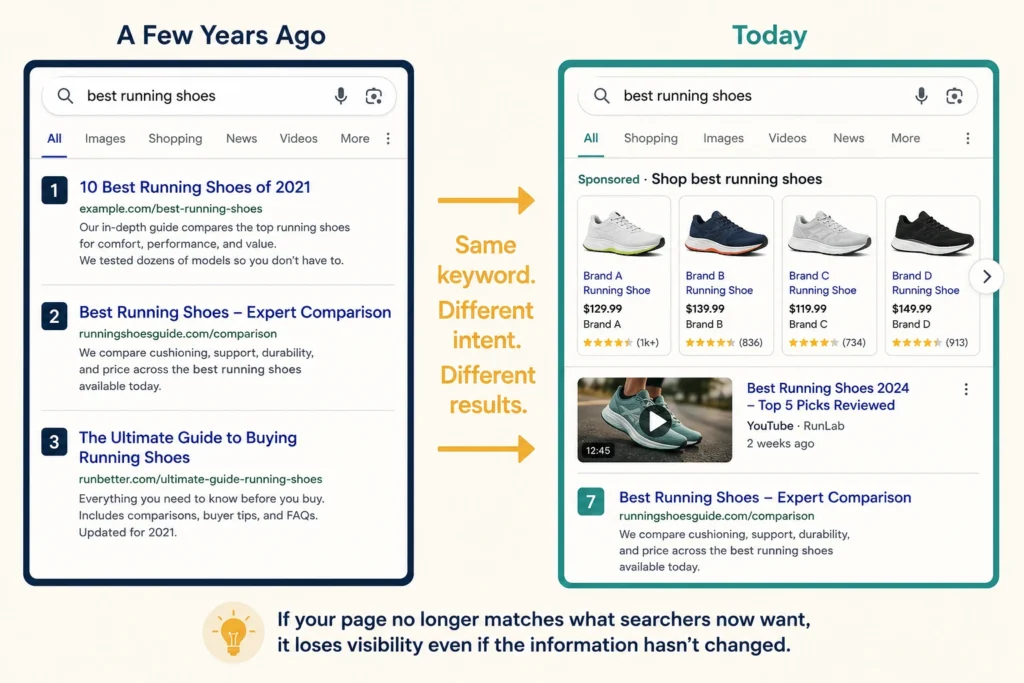
The way people search for a keyword can change even when the keyword itself stays exactly the same. As search behaviour evolves, Google may decide that a different type of content better satisfies what people are looking for.
Take a search like “best running shoes.” A few years ago, long comparison guides might have dominated the results. Today, Google may favour shopping pages or video reviews because they better match what searchers now want.
This means if your page no longer aligns with that search intent, it can lose visibility even if the information itself hasn’t changed.
Your Website Can Change Without New Content
Not every ranking change starts with new content. Technical issues and routine updates can alter how your website performs in search without anyone noticing straight away. Here are some of the most common causes:
- Plugin or Theme Updates: Most sites run plugin and theme updates automatically. Sometimes those updates slow your site down or break functionality without you realising it.
- Hosting Performance Changes: Hosting performance can decline even when your website hasn’t changed. And slower server response times lead to slower page loads. In fact, according to Google, 53% of mobile visitors leave a page that takes more than three seconds to load.
- Internal Link Structure Shifts: Every internal link helps Google discover and understand the importance of your pages. As your website grows, those links often shift around, and older pages may receive less internal support than they once did.
- Image and Tag Changes: Some plugin or platform updates can reset or remove image alt text and important meta tags without warning. When that happens, Google has less information to understand your content, which can make it harder for Google to interpret correctly.
None of these issues involves rewriting your pages, yet each can affect how Google crawls, understands, or evaluates your website. That’s why technical SEO deserves regular attention, even when you’re not publishing anything new.
How to Tell If Your Organic Search Drop Is Worth Worrying About
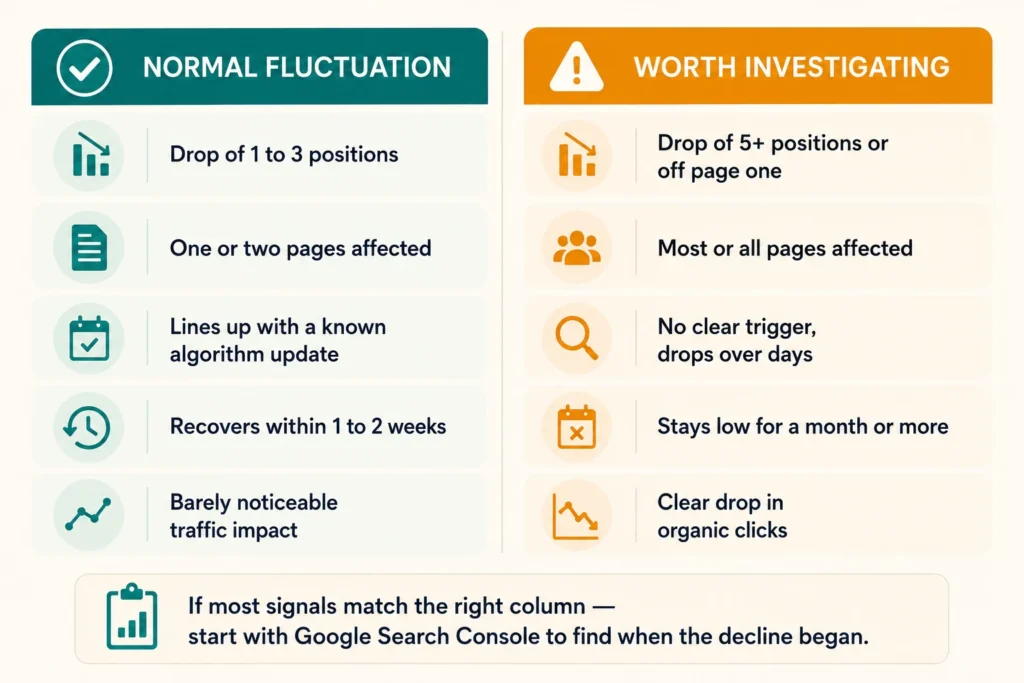
The scale, timing, and spread of a ranking drop tell you whether it’s normal noise or a genuine problem. Use the table below to compare the two:
| Signal | Normal Fluctuation | Worth Investigating |
| Size of drop | 1 to 3 positions | 5+ positions, or off page 1 |
| Pages affected | One or two pages | Most or all pages on the site |
| Timing | Lines up with a known algorithm update | No clear trigger, drops over days |
| Duration | Recovers within 1 to 2 weeks | Stays low for a month or more |
| Traffic impact | Barely noticeable | Clear drop in organic clicks |
If most of what you’re seeing matches the right column, it’s worth investigating further. Google Search Console is a good place to start, as it shows which pages have lost organic traffic and when the decline began.
Search Visibility Is Something You Maintain
Search visibility isn’t a finish line but an ongoing process. Most weeks, that simply means keeping an eye on your rankings and organic traffic. Every so often, though, you’ll spot a change that deserves a closer look.
If you’re not sure what’s behind a ranking drop, AccuVantLabs can help identify the cause and recommend the right next steps. We work with Brisbane businesses to build SEO (Search Engine Optimisation) strategies that hold up over time. Get in touch to find out what’s affecting your search performance.
Frequently Asked Questions
These are some of the questions we hear most often from Brisbane business owners trying to make sense of their search performance.
Does social media activity affect my search rankings?
Not directly. However, social media can increase your content’s reach, which makes it more likely to earn backlinks that can indirectly support your search visibility.
How long does a normal ranking fluctuation last?
Most minor fluctuations resolve within one to two weeks. If your rankings haven’t recovered after a month, it’s worth investigating further rather than assuming it will correct itself.
Which SEO tools can I use to monitor my rankings?
Google Search Console is the best free starting point. Paid SEO tools like Ahrefs, Semrush, and Moz track keyword rankings, organic traffic trends, and competitor movements in more detail.
Does original content still matter if rankings can shift passively?
Yes. Fresh, original content gives Google more reasons to keep reassessing your pages favourably. Sites that consistently publish quality content tend to recover from fluctuations faster than those that don’t.
Do search engines like Bing follow the same ranking patterns?
Broadly yes. Bing uses similar signals including relevance, backlinks, and page experience, though its algorithm weighs them differently. Sites optimised for Google’s search generally perform reasonably well on Bing too.